Liz wasn’t working on New Year’s Eve day, and Grant was only working in the morning, so we headed out on two separate expeditions.
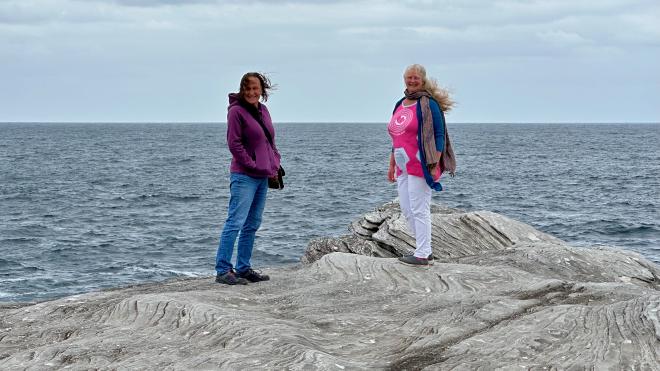
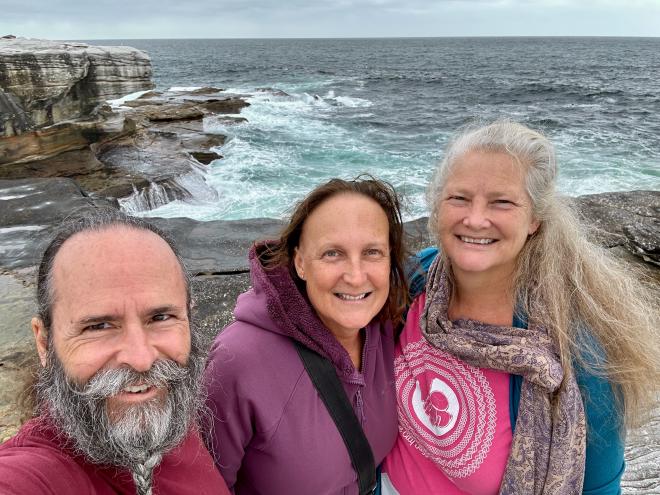
In the morning Liz drove us out to Voodoo Point, south of Kurnell, where we went for a walk along the clifftops.
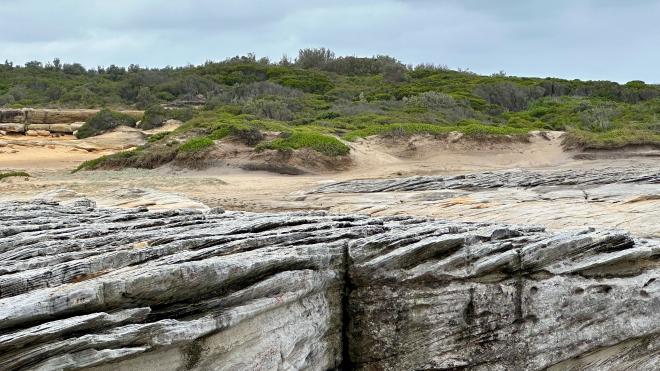
This is a spectacular, harsh landscape, with imposing cliffs and very cool erosion patterns on the stone. It’s popular for fishing, but very dangerous. There are signs warning those fishing to wear wet suits and life jackets, in case they get swept out to sea – at which point they’d likely be battered on the rocks, but that’s another story. We did see a few folks fishing, all properly attired, as well as a memorial plaque to a fisherman who lost his life on the Point.
Inland from the cliffs are sand dunes, giving way to forest.
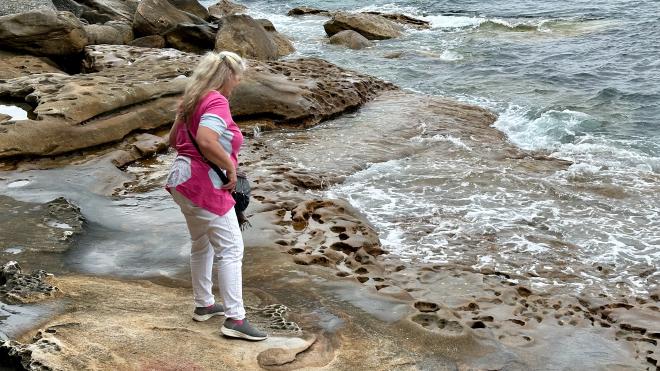
From Voodoo Point we drove into the Kurnell side of Kamay Botany Bay National Park. The Park occupies two peninsulas, one on either side of the entrance to Botany Bay. It includes some sheltered areas where we were able to walk right down to the water.
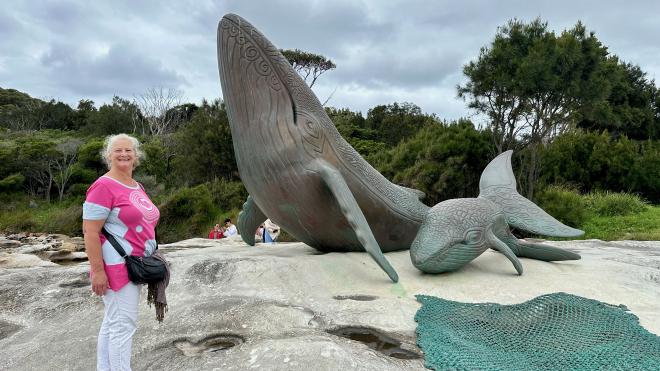
Botany Bay is of course well-known as the site of James Cook’s first landing on the Australian continent, in 1770. We visited the monument marking the landing site, but found this whale sculpture farther down the shore much more interesting. The net is a bronze cast of a traditional fishing net, knotted by aboriginal master weaver Phyllis Stewart. There are some rock pools just a bit farther along that are supposed to be quite lovely, but unfortunately the tide was too high to visit them.
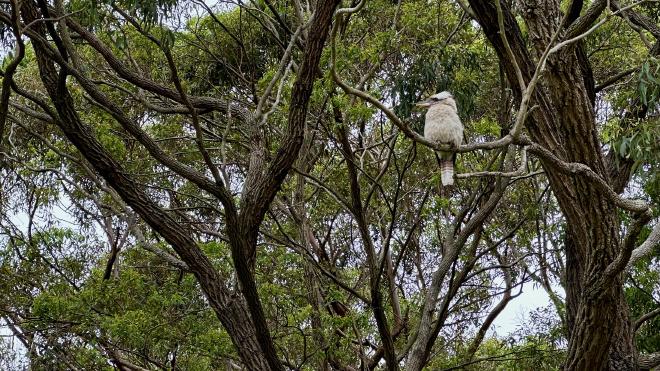
On our way out of the park we finally managed to get a picture of a Kookaburra.
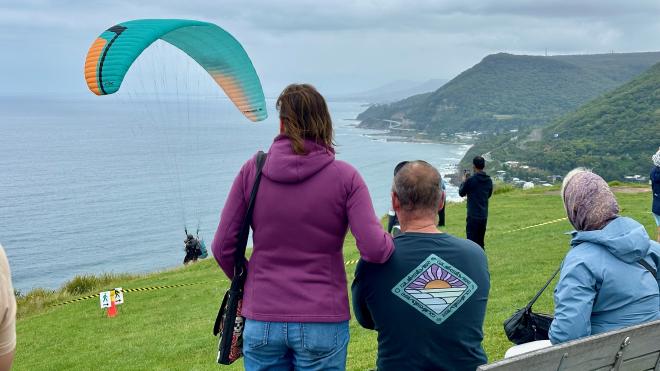
In the afternoon Grant took us for a leisurely drive down the coast, towards Wollongong. Along the way we stopped for a bit at Stanwell Park on Bald Hill, where we watched the paragliders setting up and taking off.
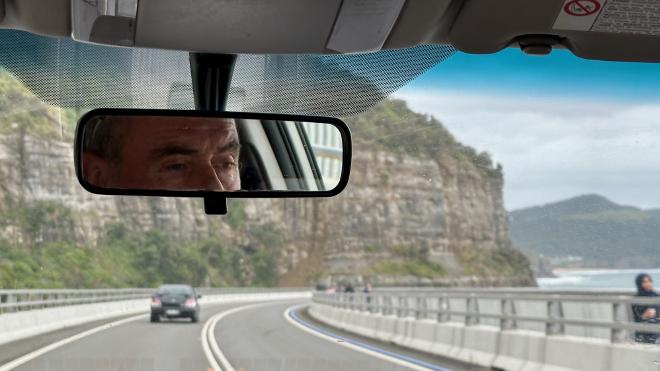
The road along the coast provides beautiful views of both land and sea. This impressive bit of engineering is Sea Cliff Bridge, just south of Stanwell Park. It was opened in 2005, replacing a stretch of road that had been built into the cliffside but collapsed. There are some really impressive photographs at the link.
Of course, Sydney is famous for its New Years Eve fireworks on the harbour, both because they’re extravagant and because Sydney is among the first major cities to celebrate the New Year.
We had seriously considered heading down to the harbour ourselves, but decided not to after exploring the logistics of the trip. For one thing, all the best viewing locations were open admission but controlled numbers, and expected to fill up early. That turned out to be true – the main sites were completely full by 11:20 in the morning – so we would have had to camp out for most of the day just to have a spot. Getting back to Liz’s place afterwards would also have been a challenge: there were extra trains running out of the harbour area, which would have taken us to the station nearest Liz’s at about 2:30 a.m. (optimistically). And then we would have had an almost four kilometre walk. In the end we decided to give it a miss, which let us have our lovely day out with Liz and Grant. Being the wild partiers that we are, we were actually in bed with the lights out before midnight.
It’s amazing how often mature wisdom looks exactly the same as just being too darned tired!
So, if you want, you can watch the New Year 2024 fireworks the same way we did: via the City of Sydney’s official video, after the fact.
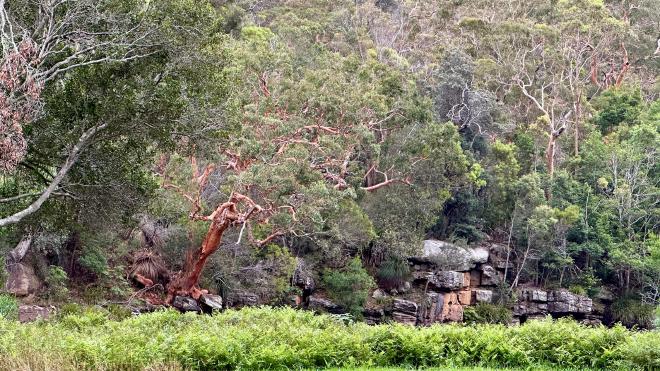
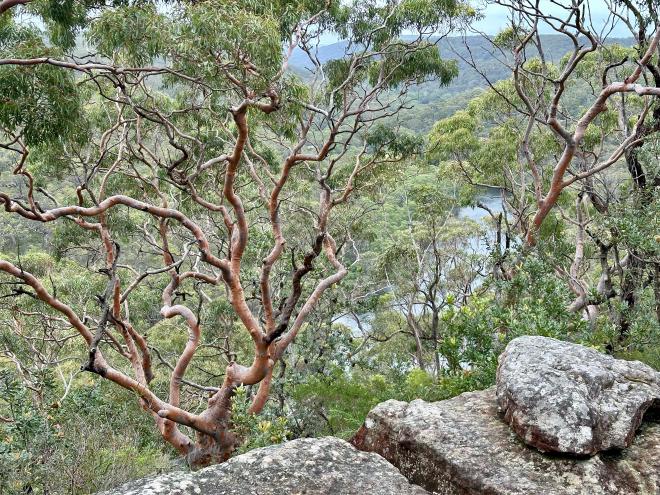
Happy New Year! Liz had to work, so we mostly took a relaxing down day, but we did get out for a walk in a part of Royal National Park we hadn’t previously visited. This is a view of the Hacking River from a rocky outcrop on the Florence Parade trail.
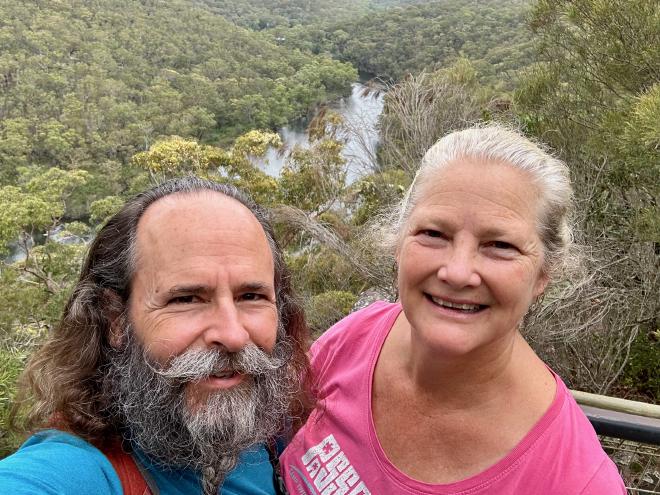
And here’s another view of the river, with a couple of random people in the way, taken from the Bungoona Lookout.
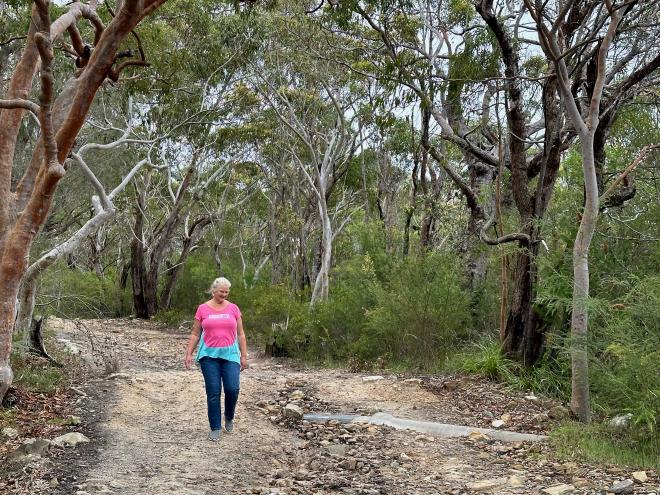
This is what most of the roads we were on looked like. Just a few moments after this picture was taken, a family of four on mountain bikes went zooming past us (with lots of bell-ringing and other warning). The boy, who looked to be about twelve years old, caught some serious air going down the hill.
When Liz and Grant’s friend Peter heard that Liz had Canadian cousins coming to visit, he offered to construct a one-day itinerary to cover what he felt were the essential Sydney sites for visitors. This seemed like far too good an offer to pass up, so we decided to spend a day with Peter’s notes as a guide. All the words in italics in this section are taken directly from his email, edited a bit here and there for clarity.
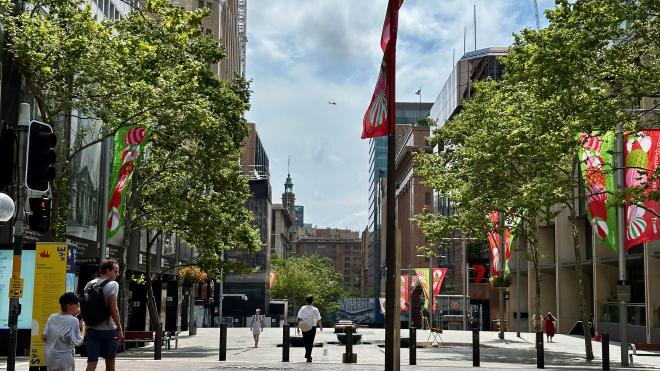
At Gymea Station, proceed to the platform and take a Bondi Junction-bound train. At Como you will notice you cross the Georges River, famous for oysters, and named after King George who lost the USA. After Hurstville you should be able to glimpse Botany Bay in the distance on the right hand side, the site of Captain Cook’s landing, and claiming Australia for Britain. They were racing the French at the time. Alight at Town Hall Station. You will notice there are other platforms above yours. These serve trains that cross the harbour bridge.
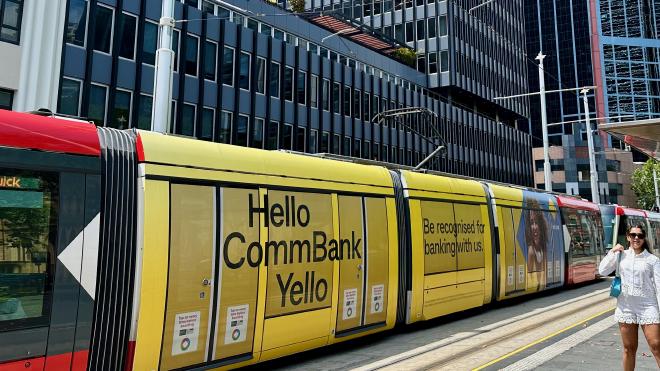
Emerge into the street. The street with the trams is George St. Notice the trams arrive at their last stop with overhead pan tech icons taking electricity from over head wires. Notice their pan techs fold down and they continue to draw electricity from a third rail. This is to protect the views of the heritage buildings along the street.
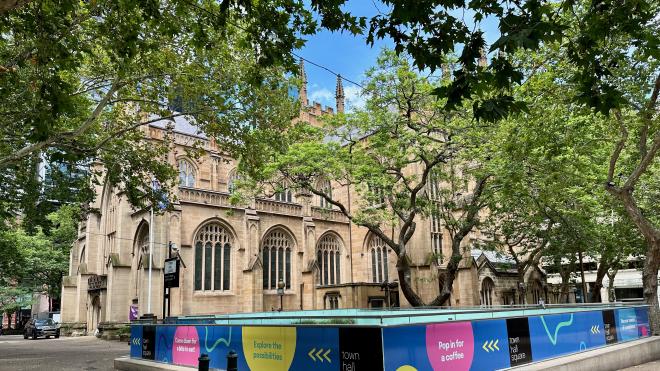
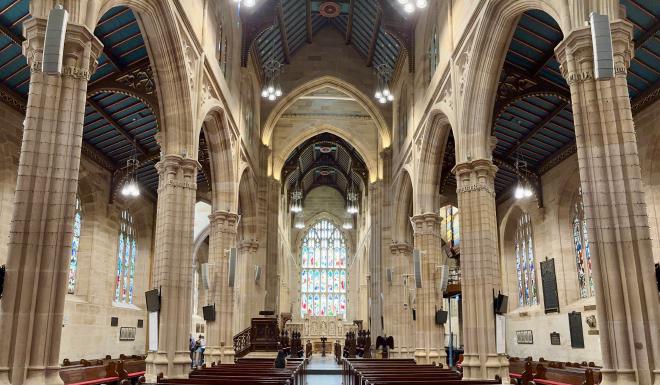
Peter’s instructions mostly just took us past things, with the aim of covering a lot of ground in one day. We chose to go inside the Cathedral, which was quite lovely.
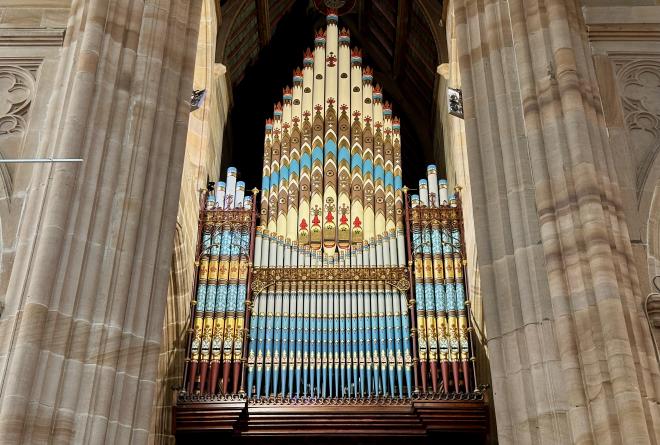
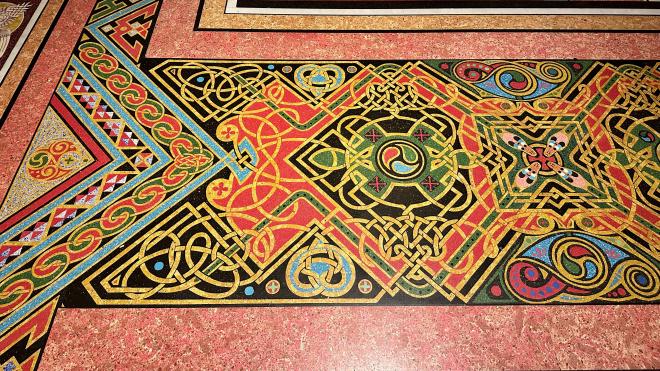
The Cathedral pipe organ’s decorations were unlike any we’d seen before. We were delighted to learn that it had recently been restored by a company from Quebec.
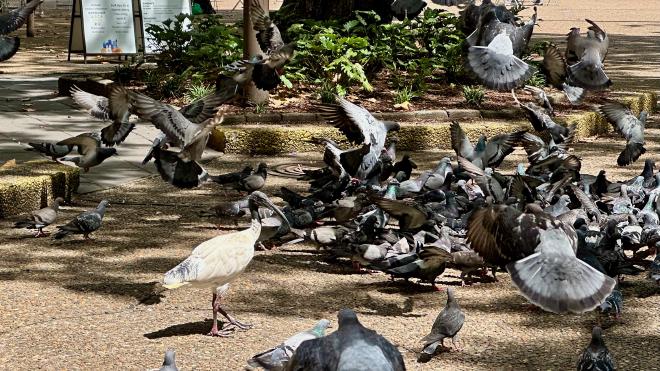
There was quite a cluster of birds outside the Cathedral, mostly pigeons but also one Australian White Ibis.
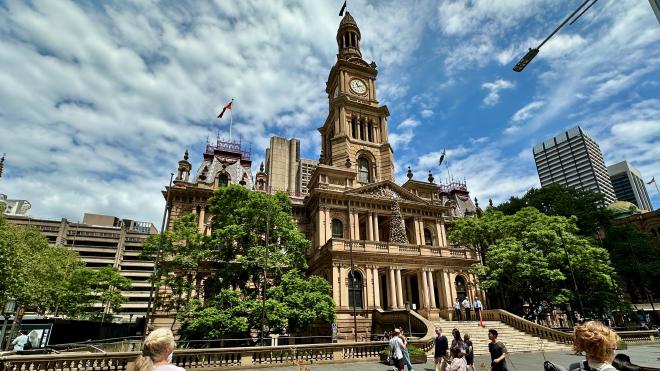
At this point, Greg got a phone call from his friend Leann Richards, a Sydney juggler, historian, and historian of juggling, who we’d been making plans to connect with sometime during our stay. It turned out she was quite near us, and happy to join our walking tour for a bit, so we met her at the Town Hall steps before continuing.
Pop quiz: how many serious historians of juggling do you think Greg knows well enough to call friends?
Answer: at least three: Leann, Erik Åberg (who we saw briefly in Stockholm), and David Cain. If we can arrange to stop by David’s Museum of Juggling History in Middletown, Ohio, on our way back home, we’ll have seen all three of them on this trip. (Greg also knows David’s identical twin brother Scott, who is himself a juggling historian and co-curator of the Museum, but he doesn’t know Scott quite as well as he knows David.)
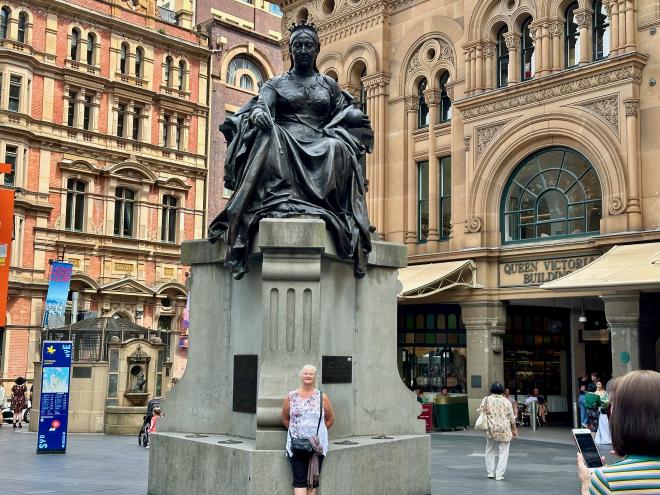
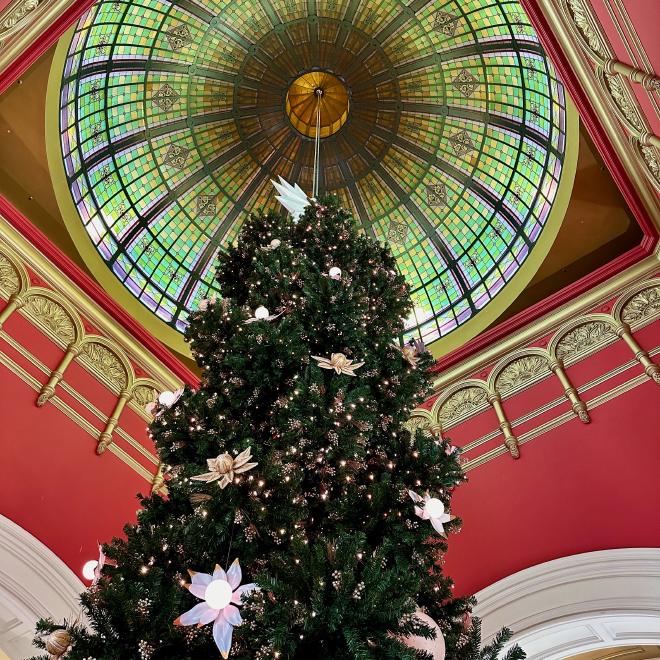
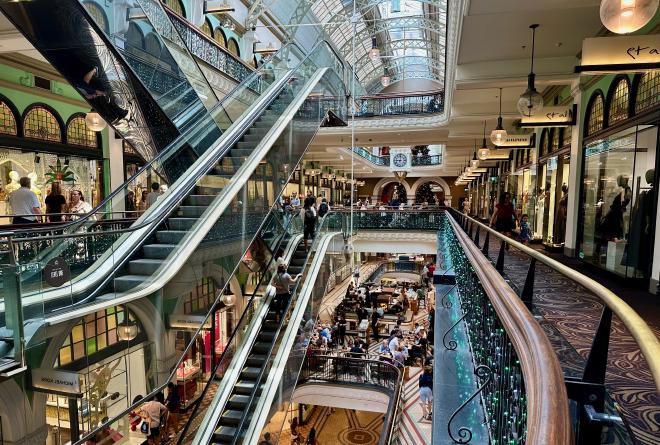
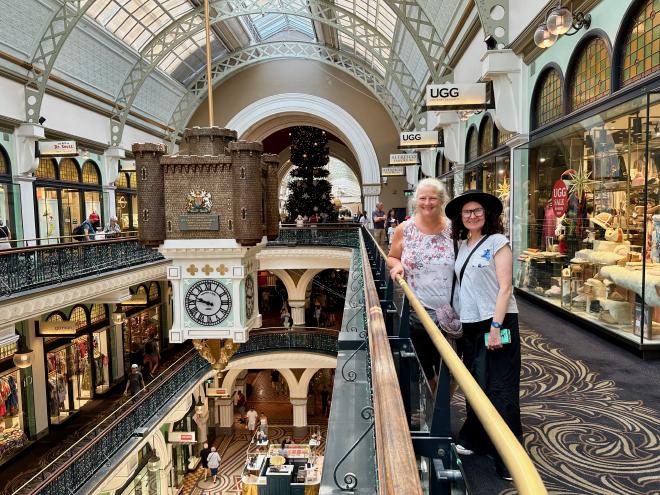
North of the statue stands the ornate Queen Victoria Building. Enter, and proceed right through. We stopped with Leann for a cold drink and a very pleasant chat. Note stained glass…
… the famous glass dome…
…the illustrated clocks on the upper floors and quaint loos. No picture of the loos, but that’s Leann with Karen.
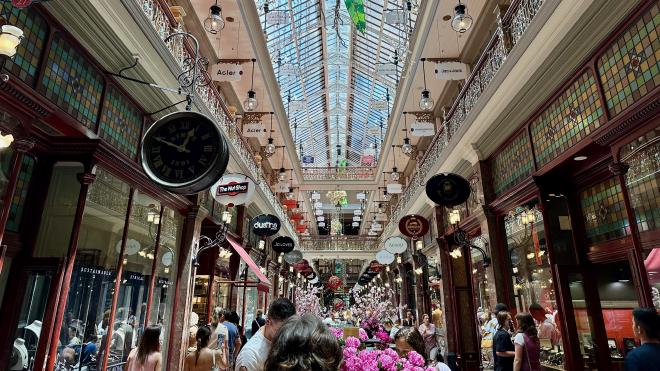
At the end of the building, cross George St into the Myer department store. At one stage, the ground floor was the biggest perfume department in the world. Walk right through the store and emerge down short escalators into Pitt St Mall. Turn left and walk almost to the end of the block to find the Strand Arcade. Oldest in Australia, and a template for all other arcades across the country.
Return to Myer. You will see the entrance to Westfield shopping centre. Enter Westfield and walk right through till you enter David Jones food hall. Enjoy. Take the escalator up and you will see St James subway station across Elizabeth St, and Hyde Park. In the upper level of Westfield we stopped at the food court and had a quite creditable Thai meal for lunch.
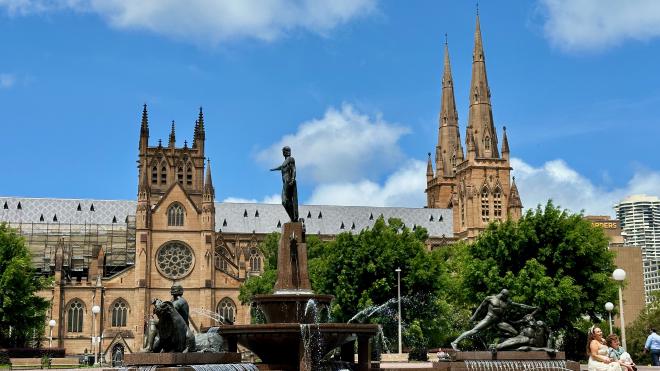
Cross to Hyde Park and head towards St Mary’s Cathedral, the largest gothic structure in the country. The park was originally used to graze sheep and cattle and for horse races and cricket matches.
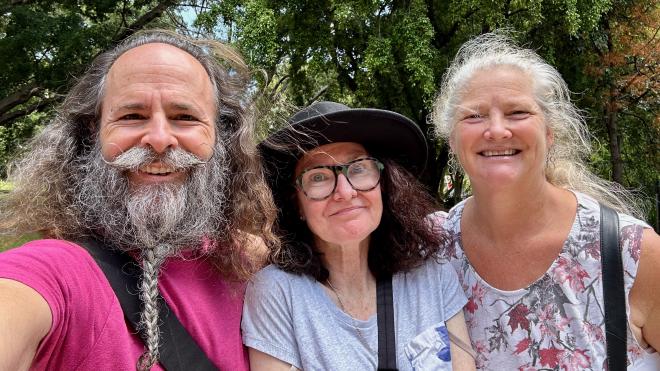
At this point Leann had to head off. She’s not big on pictures, but agreed to let us take this selfie. Thanks, it was wonderful to see you!
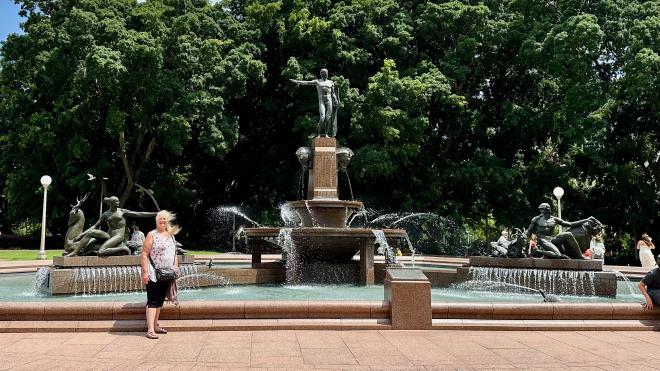
The fountain you see is the Archibald Fountain, and I seem to recall it’s in honour of a French man. Almost! From the plaque on the fountain: “This fountain is the gift of the late J.F. Archibald to his fellow countryman [sic] and is intended in terms of his will to commemorate the association of Australia and France in the Great War 1914–1918. It was erected in 1932 and is the work of François Sicard, sculptor, Paris.”
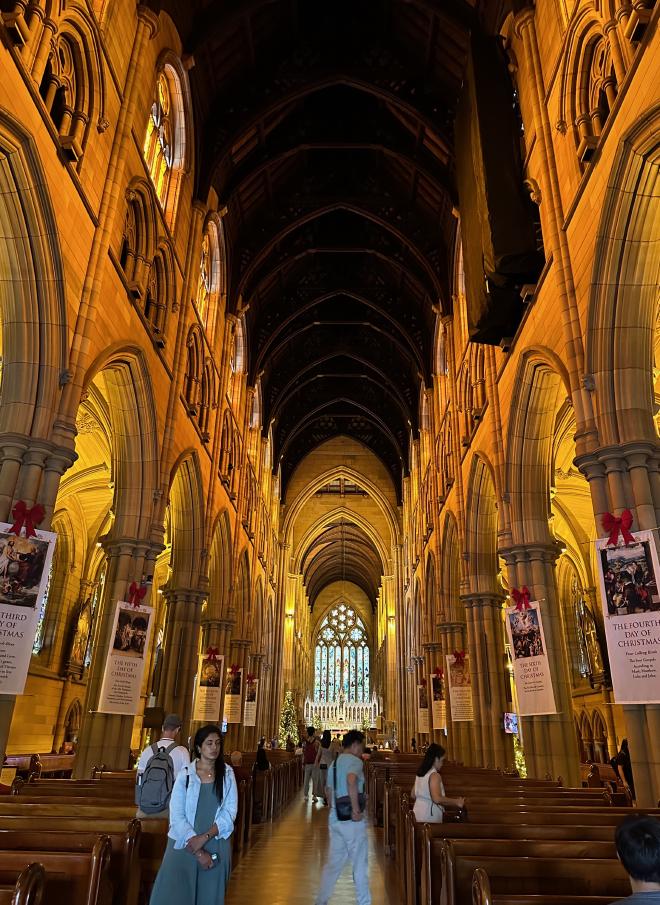
Being incorrigible rebels, we again deviated from Peter’s plan and went into St Mary’s Cathedral, which was also quite striking.
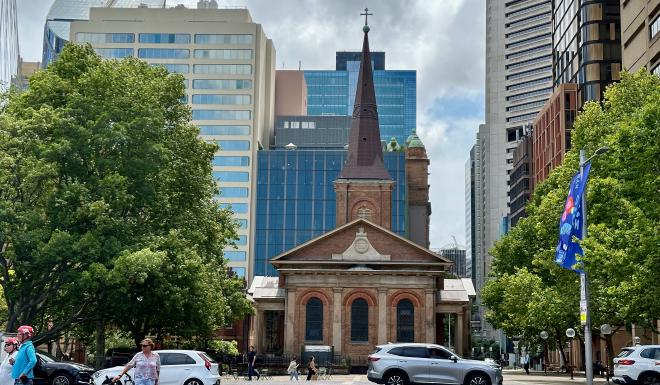
Turn left at the fountain and proceed to Macquarie St. You will see St James Church on your left. Georgian. Heritage listed oldest church in the country. Built by a convict architect.
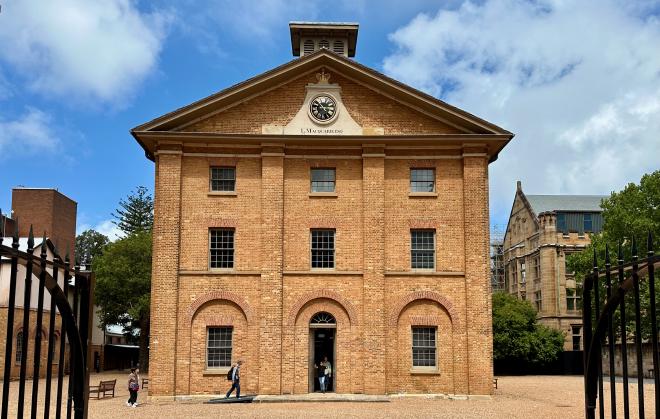
Cross to the Georgian Hyde Park Barracks. All the bricks came out from England on a seven month voyage, as ballast. They brought out windows and doors too.
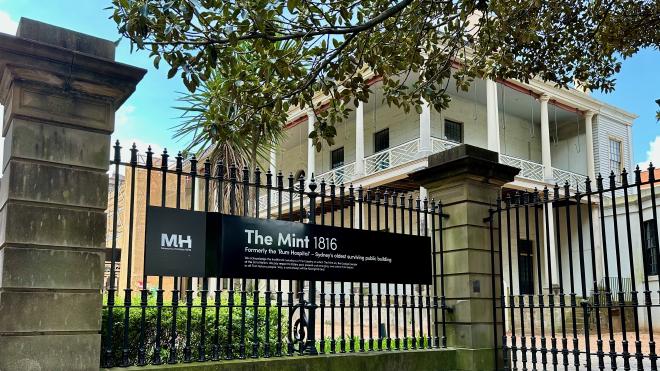
They brought windmills, seeds, animals, cloth, every detail, but forgot one thing: money. So they used rum. The Georgian building coming up next with the verandahs was originally the Hospital, then later the Mint. It was built with rum as payment.
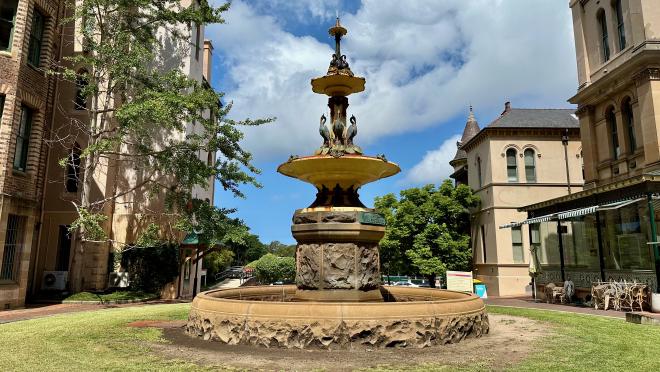
Next is the Sydney Eye Hospital, and if you go into its courtyard, you will find a fountain, and views over the public domain to the art gallery on the other side. Note: colonial buildings are all in a honey sandstone. The sandstone is formed from sand washed from an Antarctic beach in an ancient storm.
Back on Macquarie St, look left into Martin Place. TV studios on the right publish the news in lights outside, and there are wonderful laneways lined with cafes, and a beautiful recital hall, hidden away. Don’t go, we have no time.
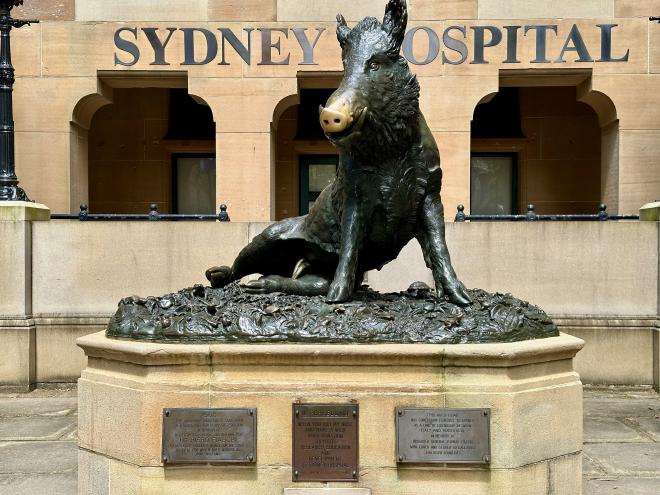
Continue past the Hospital, and past the Parliament Building, also colonial. Unbelievably, this “wild boar fountain of good luck”, also known as “Il Porcellino”, didn’t make it on to Peter’s list. A clear oversight!
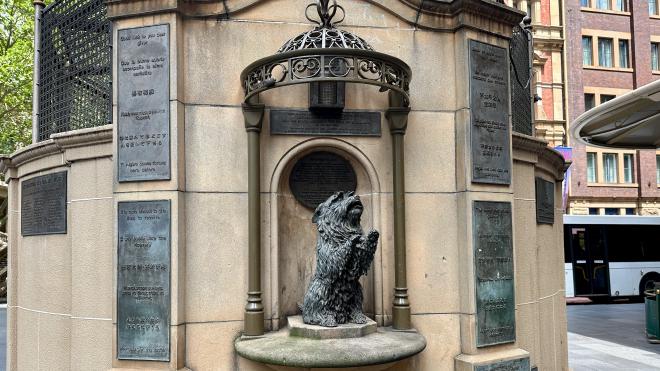
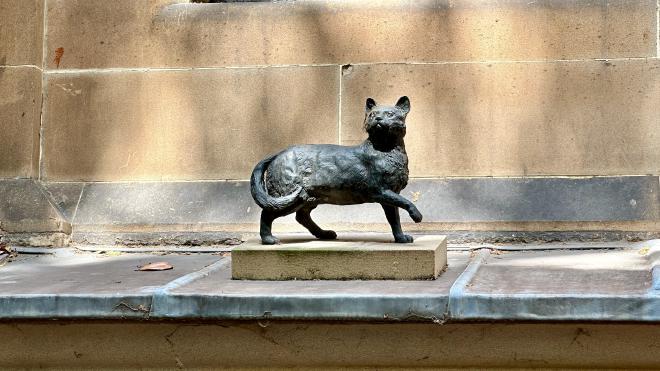
Next is the State Library housing Captain Cook’s diaries and historical drawings of the first sightings of Australian nature. Look for a tiny bronze statue of a cat on the side of the building, in memory of the cat that came out from England with Captain Cook.
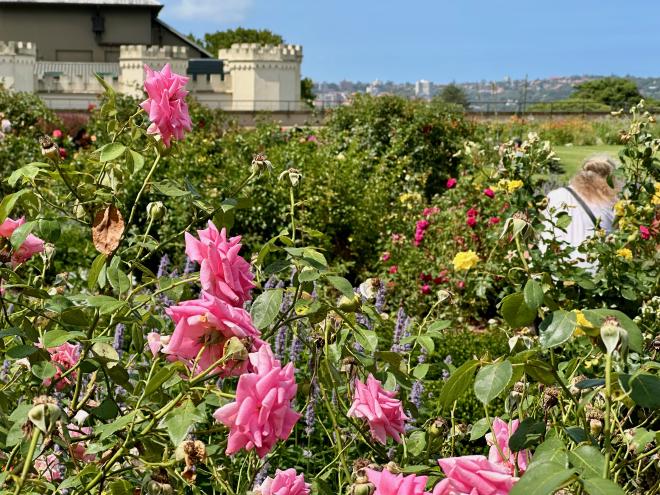
Next comes the Royal Botanic Garden, entrance opposite the Library. The turreted building on the left is the Conservatorium of Music, which used to be the Governor’s stables.
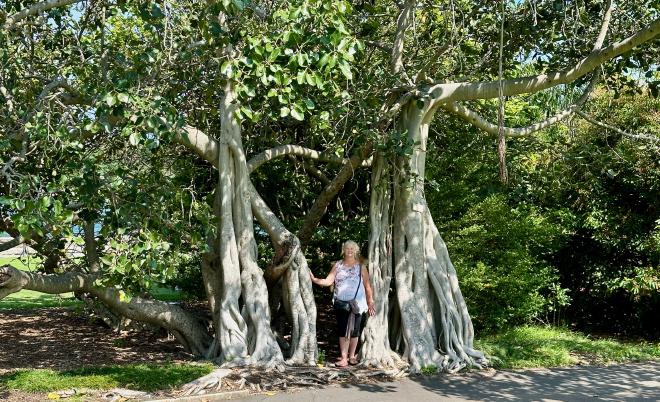
The Gardens were originally where the colony grew its food. Go down into the valley of the gardens. Government House is up to the left. Head towards the harbour.
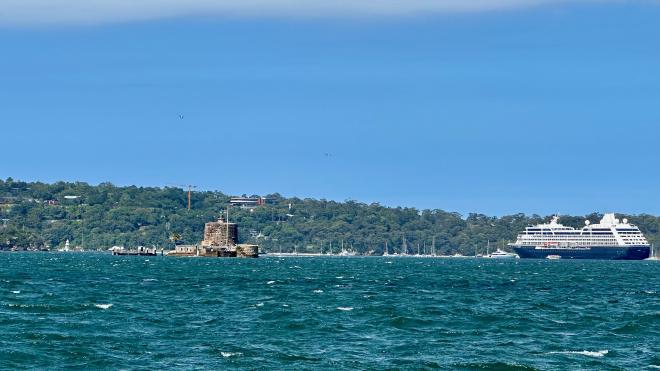
See the island with the round tower, Fort Dennison, the only Martello tower outside of Europe. Not quite: there are four Martello towers in our home town of Kingston and many others scattered around the former British Empire. Perhaps Peter meant the only one in Australia? Built to defend against Napoleon. Probably also not true. As the French Revolution took hold there were huge migrations of French to Sydney, and you might see stairs that remind you of French influences. With the Napoleonic Wars, getting to Australia became more difficult, but taxes in England were crippling to pay for the war, so many took the risk and went to Sydney where there were no taxes.
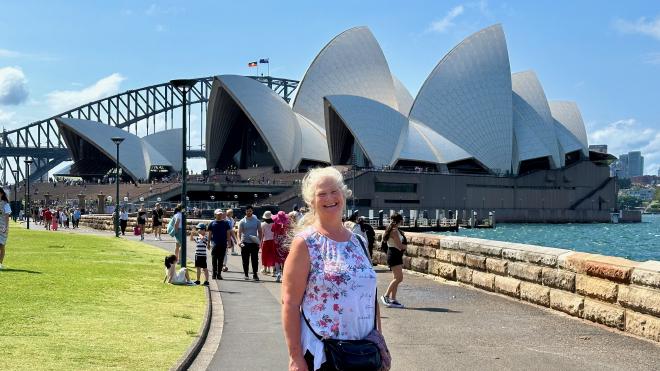
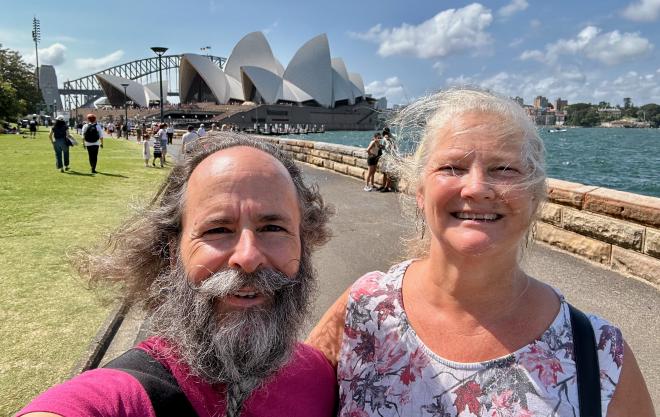
Down at the harbour side, you will see the Opera House.
Proceed and explore. Take a selfie.
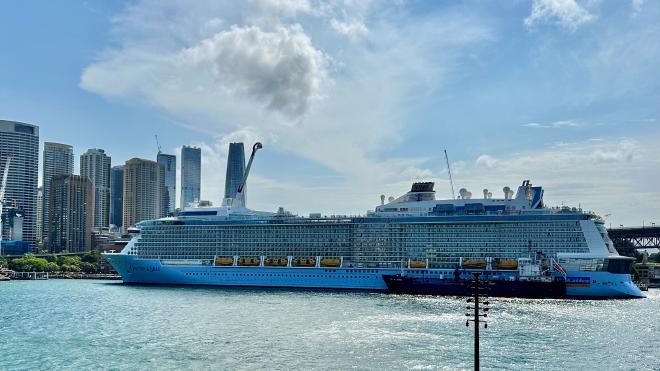
Walk to the Circular Quay ferry terminal. There is a food court for great food in a building opposite the terminal and train station. Docked in Circular Quay we found Royal Caribbean’s Ovation of the Seas. This is a sister ship, of the same design, as the Quantum of the Seas that we’ll be taking from Brisbane to Honolulu in April.
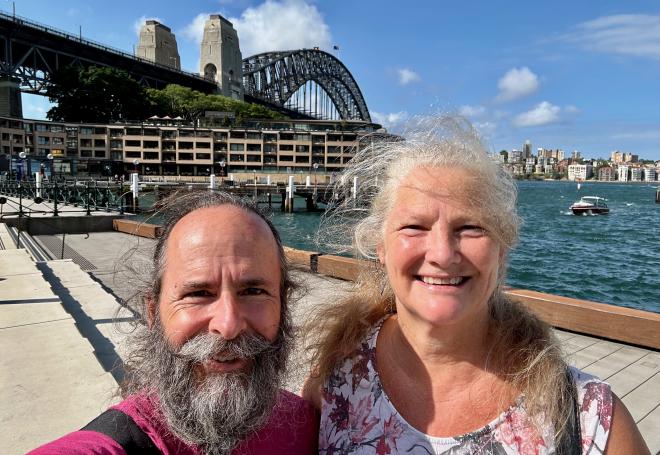
Take a selfie with Sydney Harbour Bridge.
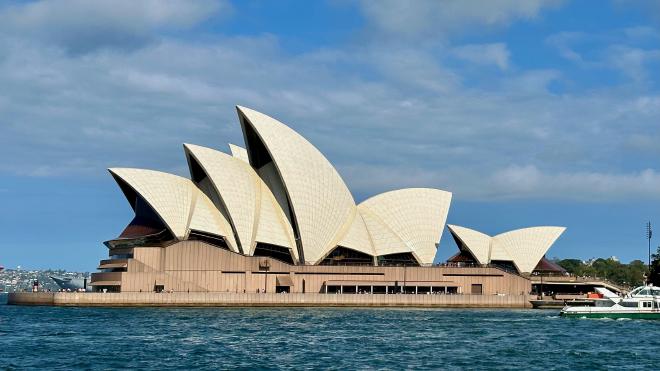
And take another picture of the Opera House, because it’s just so darned photogenic.
At this point our feet told us we were done for the day, despite there being more left on Peter’s itinerary. I guess those extra stops cost us the end of the programme! We’ve included the rest of the itinerary here, in case you’re interested in following it on your own.
Now proceed to the ferries and take one to Barangaroo. It will go under the Harbour Bridge to Luna Park, which has the world’s first single track magnetic roller coaster, then to Barangaroo.
You will have missed an area called The Rocks. It’s cobbled and gas lit and very quaint and behind the shipping terminal. Reserve this for another day. Walk along the esplanades towards the old bridge that opens for yachts. Pass Madame Tussauds, the Wildlife Zoo, Aquarium, and on to the W Sydney Hotel and the Sydney IMAX. Across the bay is the famous fountain where you go down to the orb in the middle without getting wet, and make a wish. You will see the 9,000 seat theatre and the cafes and lanes of Darling Square.
Walk back to the Pyrmont Bridge and walk up the hill to the Queen Victoria Building. Cross George Street and turn right to the Hilton Hotel. Underneath is the famous marble bar built during the gold rush. You deserve a beer. Just along from there is Town Hall Station. You need line 4.
Thanks, Peter, for an outstanding itinerary. And in case you’re wondering: yes, we did get ourselves a beer (each) when we made it back to Liz’s place.
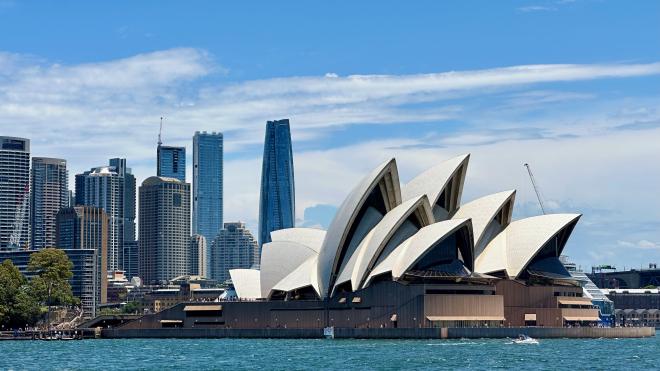
The next day we decided to head to Manly, which is a short ferry ride from Circular Quay. This let us get yet another shot of the Opera House, from a different angle.
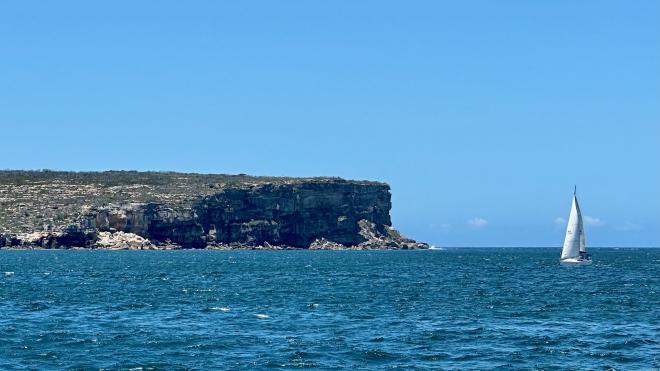
This is North Head, at the tip of the peninsula on which Manly is found. The Head is part of Sydney Harbour National Park.
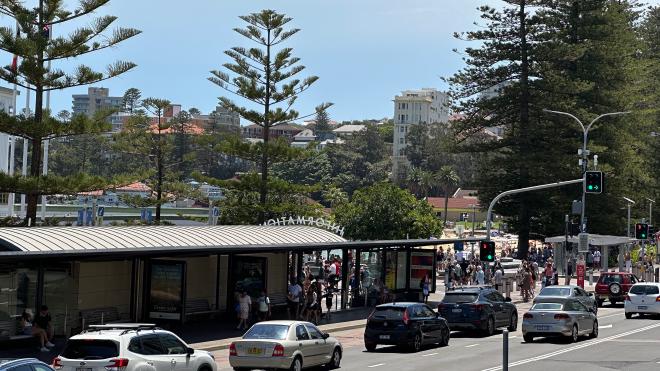
When we arrived in Manly it was lunch time, so we popped into the 4 Pines Brewpub for a meal and a beer. This was the view down the street from our balcony table.
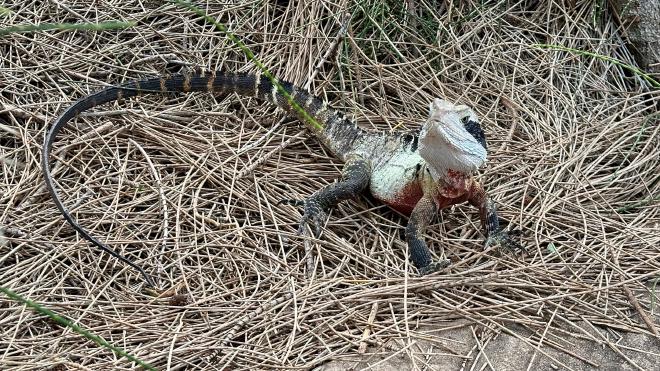
After lunch we walked through Manly’s business district to the north side of town, and along Marine Parade to Shelly Beach. There were quite a few Water Dragons along the path.
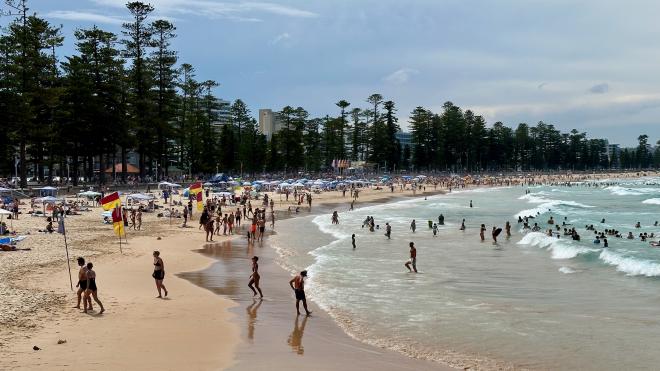
From Shelly Beach we walked back to Manly Beach, shown here, where we went for a swim. There were thunderstorms in the area so we scooted back to the ferry dock for the return trip, and managed to make it back to Liz’s place without getting wet.
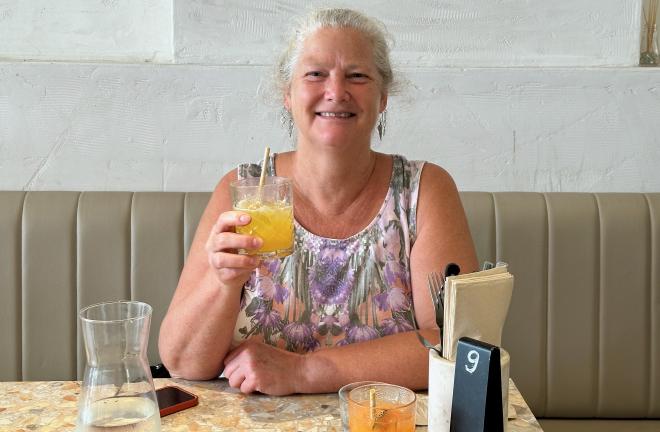
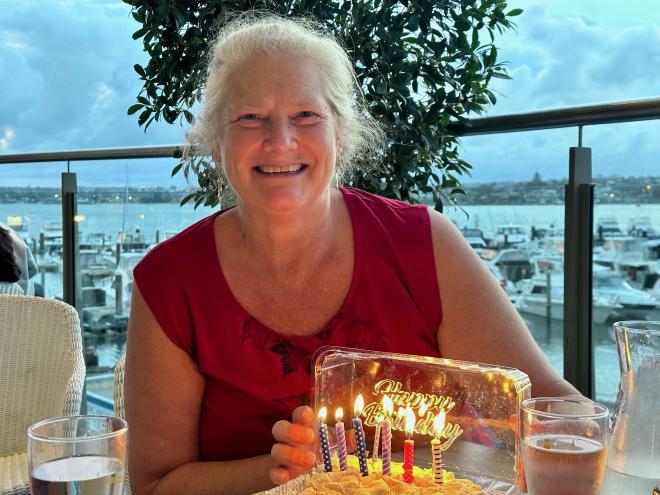
January 4th was Karen’s 61st birthday, which we started with brunch at the Jack Gray cafe, just down the road from Liz’s place. And we do mean down the road, and also up: Grays Point is quite a hilly place.
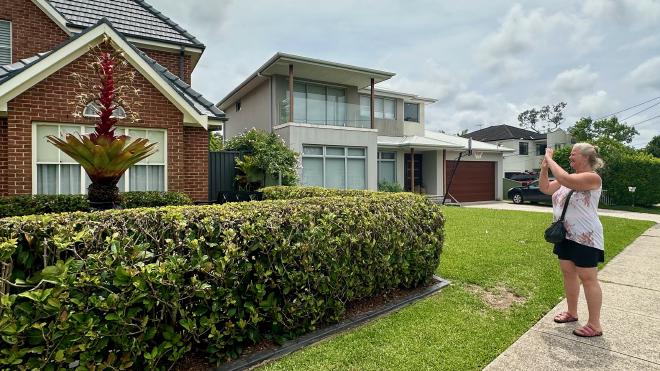
On the way back from brunch Karen took a picture of this lovely Alcantarea imperialis.
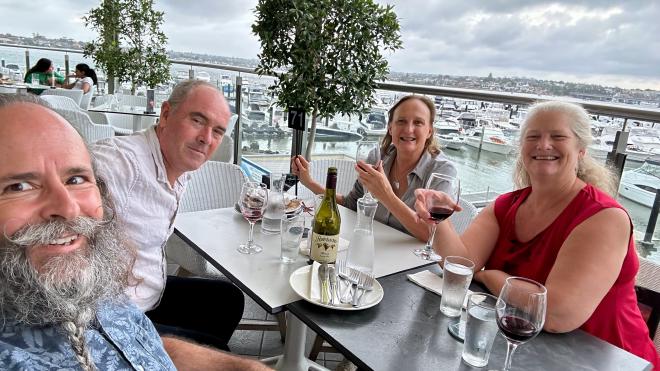
That evening we went out with Liz and Grant to the Marina’s Edge restaurant at the St George Motor Boat Club, for a combination birthday and farewell dinner. The service was a little erratic but the food and wine were both excellent. And of course, the company was outstanding!
Liz brought along a cake and candles to celebrate Karen’s birthday. We didn’t have sixty-one candles, and the cake was a little small for that many anyway, so we did the number in binary. The red candle is a zero, and the other candles are all ones. Yes, that was Greg’s idea. Our biggest problem ended up being not the binary-to-decimal conversion, but rather keeping the candles lit long enough for a photograph in the evening breeze.
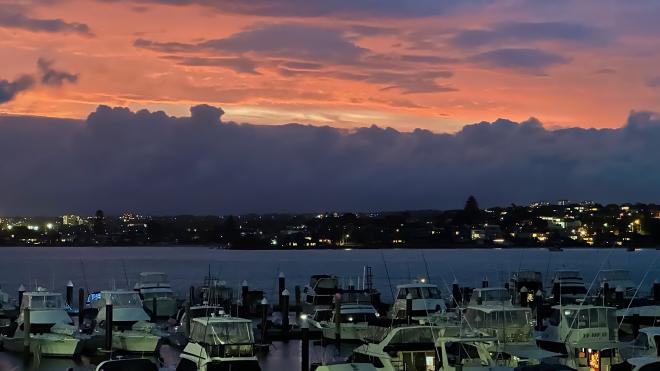
We were treated to a rather spectacular sunset from the restaurant balcony before heading back to Liz’s.
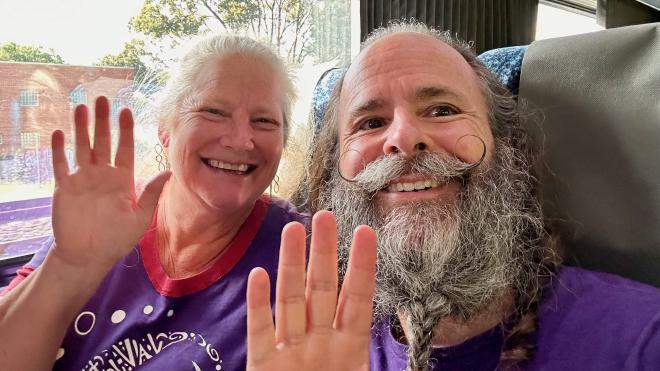
The next afternoon Liz drove us to Sutherland Station. From there we took the local train to Sydney Central, where we hopped on the Southern Xplorer to Canberra. This is the selfie we sent Liz from the train.